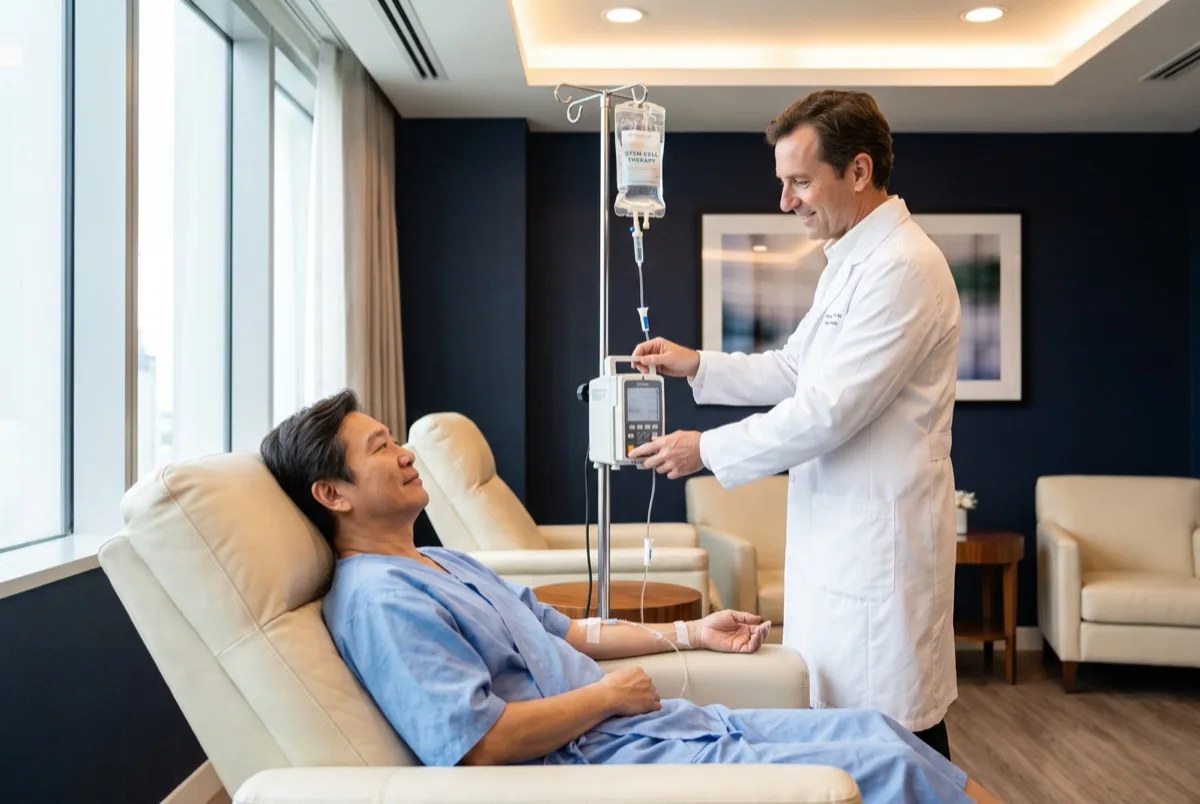
"Is it safe?" is almost always the first question we hear, and it's the right one to lead with. Stem cell therapy spans a huge range of actual practices worldwide — from rigorously licensed clinical protocols to unregulated clinics with none of the lab controls that make the treatment safe in the first place. The honest answer is: it depends entirely on where and how it's done, not on the treatment category as a whole.
What actually makes a clinic safe
Safety in stem cell therapy comes down to a few concrete, checkable things — not reputation or marketing:
- Government licensing. A legitimate clinic operates under a recognised national regulatory framework for regenerative medicine, not just a general medical license.
- Lab and sourcing standards. Cells need to be collected, processed, and screened under controlled, certified lab conditions — this is where unregulated providers most often cut corners.
- Physician oversight. Treatment should be planned and administered by qualified specialists, with a proper diagnostic workup beforehand, not a one-size-fits-all injection.
- Transparent sourcing. You should know exactly whether your treatment is autologous or allogeneic, and where the cells come from.
Autologous vs. allogeneic — why the distinction matters for safety
Autologous therapy uses cells collected from your own body, cultured, and reinfused — which minimises rejection and immune-response risk since the material is entirely yours. Allogeneic therapy uses donor-derived cells (commonly from screened umbilical cord tissue), which removes the collection step but makes donor screening and lab certification even more critical. Neither approach is inherently "safer" in the abstract — what matters is whether the clinic follows proper protocol for the type they're using.
How we vet every partner clinic
This is the filter we apply before any clinic is recommended to a client: government licensing confirmed, clinical and lab safety standards verified, and a track record we can stand behind. We don't list every clinic that will take a booking — we list the ones we'd be comfortable sending a family member to.
What to expect physically
For most clients, downtime is minimal: daily activities can typically resume immediately after treatment, with general guidance to avoid strenuous exercise, alcohol, and hot springs for about three days post-infusion to support the cells' integration. Results unfold gradually rather than overnight — early improvements such as reduced inflammation within the first month, continued repair over three to six months, and longer-term gains over the following years.
Questions to ask any clinic directly
- What government licence or regulatory approval do you operate under?
- Where and how are the cells processed — is there an on-site or certified partner lab?
- Is the treatment autologous or allogeneic, and how are donor cells screened?
- Who will actually administer treatment, and what's their clinical background?
- What's the realistic recovery timeline for my specific condition?
Talk to someone before you decide
We'll walk you through exactly what to look for and match you to a vetted, government-licensed clinic.
Start a Free Consult